Lizard inference engineering: Match performance evidence to model, quant, and context
-
Inference Engineering · Day 15 · Morning
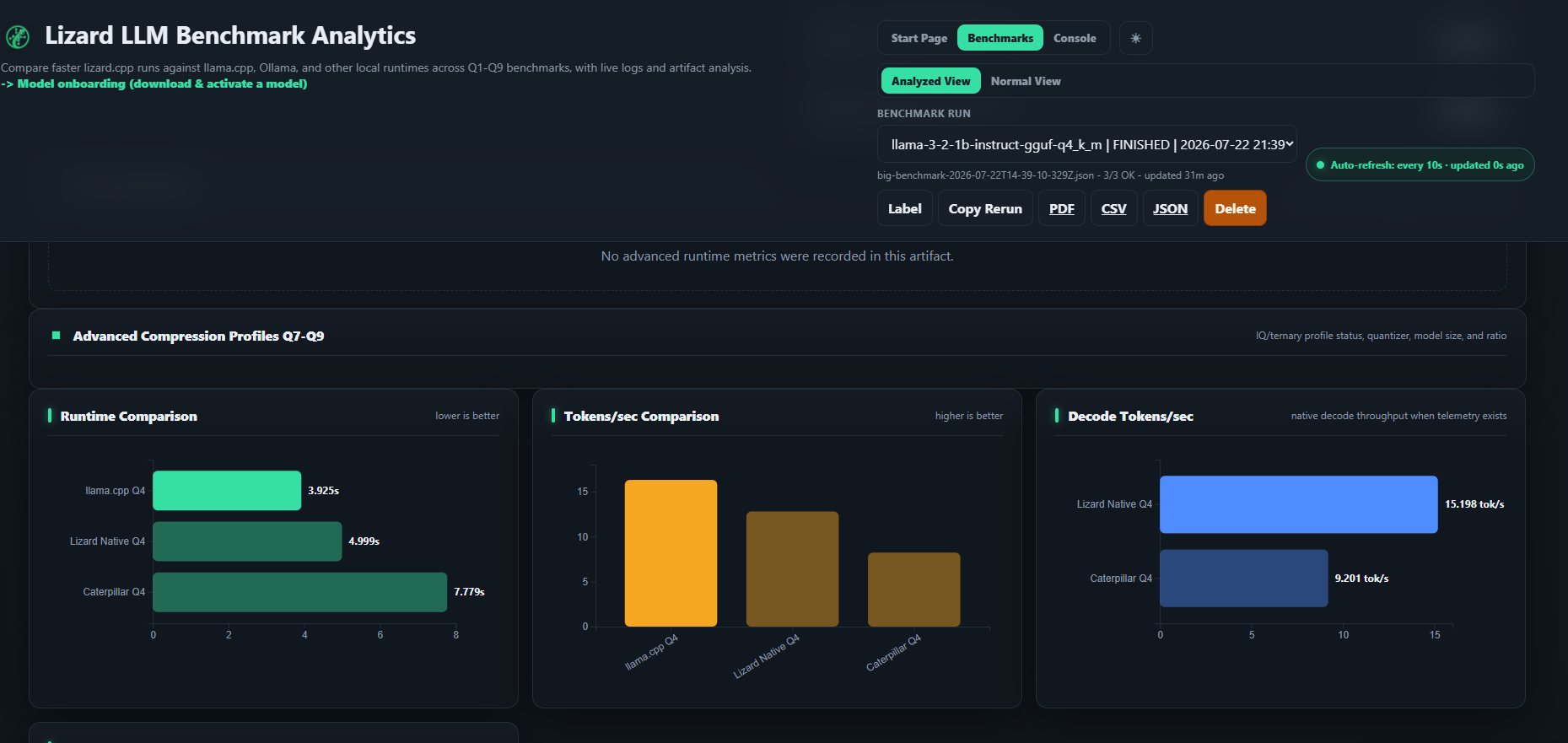
Performance evidence is only useful when you can still tell what it came from.
If a concurrency profile was measured on one provider, one model ID, one quantization, and one context bucket, that profile should stay tied to those four dimensions. Change any of them and you can change memory pressure, prefill cost, and the point where serving starts to fall over. That is why native HTTP tuning profiles are keyed by runtime provider, model ID, quantization, and context bucket before they are allowed to affect serving concurrency.
That sounds strict, but the alternative is familiar to anyone who has debugged a benchmark cache: a result collected on a smaller context or a different quant can look “good enough” and still push the wrong live configuration into contention. A profile that was safe for one run may be too optimistic once the KV cache grows, or too conservative once a lighter quant cuts memory use enough to open room for more parallel requests.
The practical lesson is to make the identity of the evidence part of the control plane, not just the log line. Keep the benchmark row, the runtime provider, the exact model, the quant, and the context bucket together, then let concurrency decisions inherit from that record instead of from a loose memory of “that fast run we saw earlier.” It is a small guardrail, but it closes a class of mistakes that are expensive to find after deployment.
How do you key benchmark evidence when the same model family shows different behavior across context lengths?
Engineering fact: Native HTTP tuning profiles are keyed by runtime provider, model ID, quantization, and context bucket before they influence serving concurrency.
Lizard The AI Runtime You'll Own—Not Rent.
Receive two professional Windows AI runtimes with lifetime updates. Run AI at native speed, keep every conversation private, and stay independent with intelligent hardware optimization and no cloud dependency.
#modelperformance #quantization #servingconcurrency #benchmarking #localllm
<!-- lizard-marketing-slot:day-15-am -->
Hello! It looks like you're interested in this conversation, but you don't have an account yet.
Getting fed up of having to scroll through the same posts each visit? When you register for an account, you'll always come back to exactly where you were before, and choose to be notified of new replies (either via email, or push notification). You'll also be able to save bookmarks and upvote posts to show your appreciation to other community members.
With your input, this post could be even better 💗
Register Login