Lizard inference engineering: Run the real HTTP readiness check
-
Inference Engineering · Day 30 · Evening
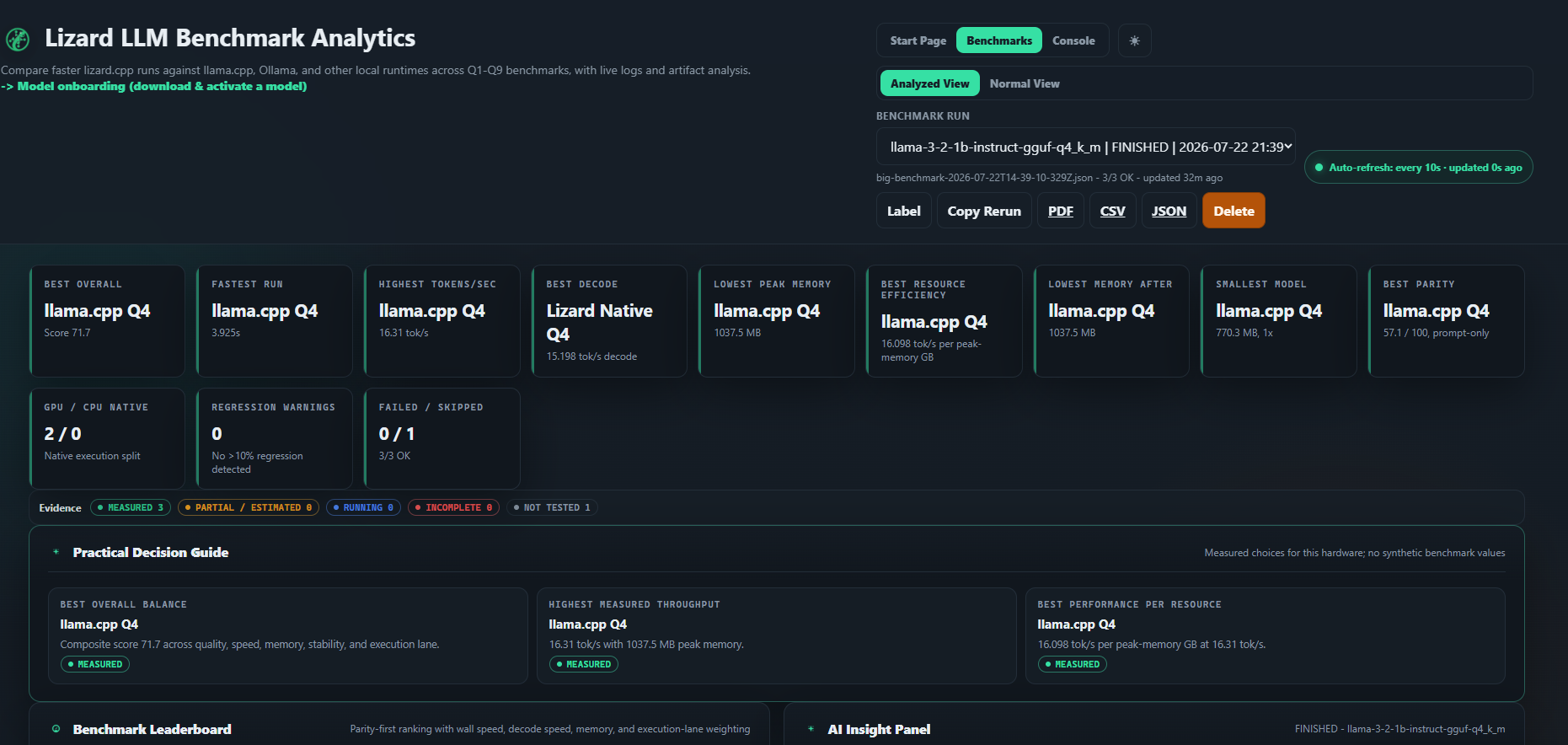
If you want a readiness check that means something, run the HTTP benchmark against a real model file instead of a toy case. The useful part here is not the peak number on a single pass. It is the comparison across the same GGUF with two batch sizes, B=16 and B=8, and the ability to line that up against llama.cpp on the same host.
That matters because batch size changes the shape of the request. A model can look healthy at one setting and expose a different bottleneck at the other. Memory pressure, launch overhead, and decode behavior do not always move together. When you keep the artifact constant and only change the runtime lane, you get a cleaner view of what the engine is actually doing.
The practical habit is simple: capture the command, keep the GGUF path fixed, save the benchmark artifact, and record the hardware context along with the result. That gives you something a second person can rerun later without guessing which variable changed.
I have found that the most useful benchmark writeup answers three things: did the model load, did the request complete, and where did the two runtimes diverge under the same input. If you only keep one number, you lose the signal.
What model and Windows machine would you use as the first real HTTP readiness check?
hashtags":["LizardLLM","HTTPBenchmark","llamaCpp","GGUF","InferenceEngineering"]},
Engineering fact: The Lizard Console command
lizard-llm benchmark httpcan test lizard-native or Caterpillar at B=16 and B=8 and compare the same GGUF with llama.cpp.Lizard The AI Runtime You'll Own—Not Rent.
Receive two professional Windows AI runtimes with lifetime updates. Run AI at native speed, keep every conversation private, and stay independent with intelligent hardware optimization and no cloud dependency.
#LizardLLM #HTTPBenchmark #llamaCpp #GGUF #InferenceEngineering
<!-- lizard-marketing-slot:day-30-pm -->
Hello! It looks like you're interested in this conversation, but you don't have an account yet.
Getting fed up of having to scroll through the same posts each visit? When you register for an account, you'll always come back to exactly where you were before, and choose to be notified of new replies (either via email, or push notification). You'll also be able to save bookmarks and upvote posts to show your appreciation to other community members.
With your input, this post could be even better 💗
Register Login