Lizard inference engineering: Measure the path users actually call
-
Inference Engineering · Day 11 · Morning
A fast worker loop is not automatically a fast product.
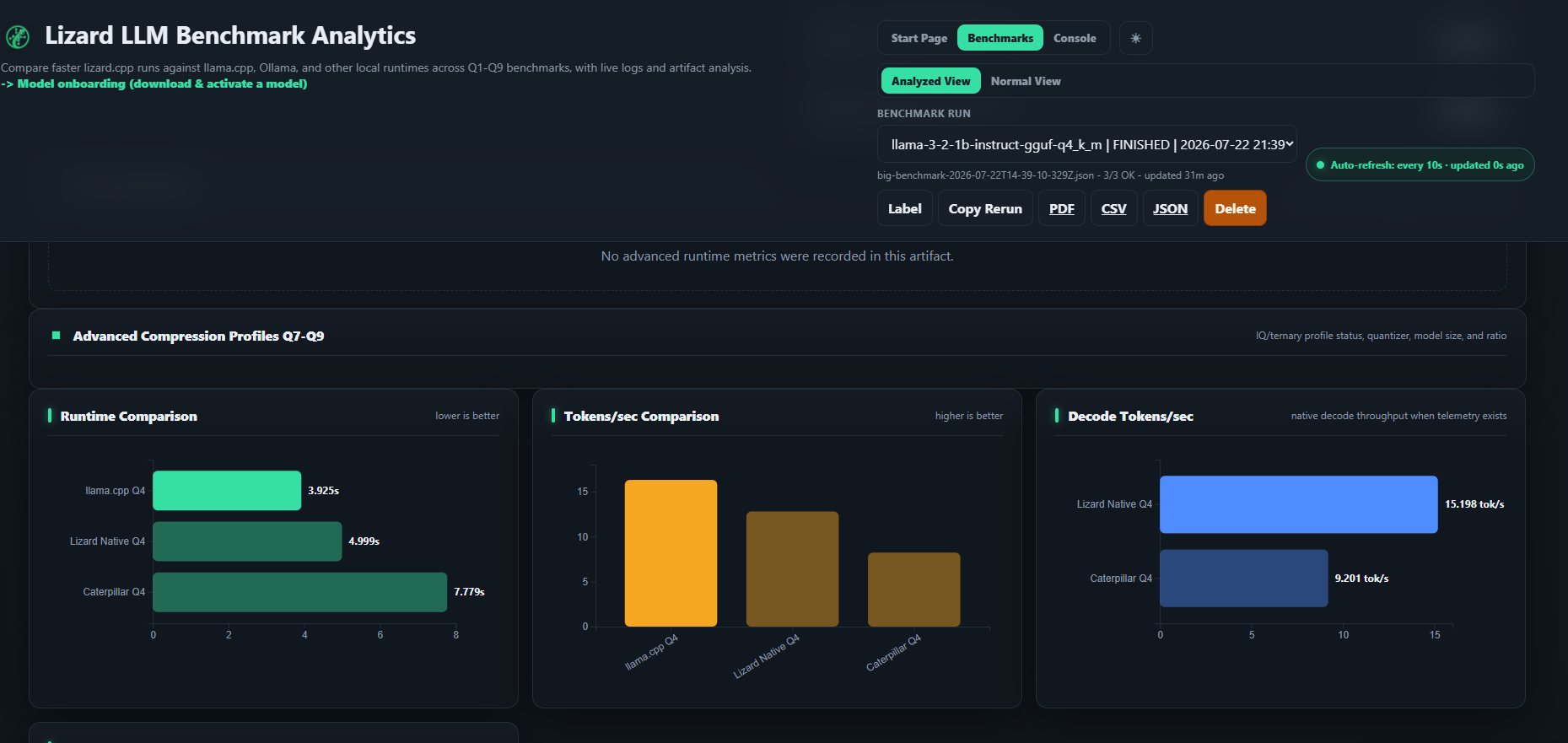
If the benchmark only times an internal execution loop, it can hide the parts users feel immediately: request parsing, scheduling, serialization, and the wait for the full response. Lizard's native readiness benchmark avoids that trap by sending concurrent requests through the OpenAI-compatible HTTP endpoint and measuring full-response throughput on the same path a client actually uses.
That matters when you are comparing runtimes, not just kernels. A tight inner loop can look excellent while the request path still pays for queueing, transport, and response assembly. Once you measure the full HTTP path, the numbers are harder to hand-wave away, but they are also more useful for capacity planning and for spotting where latency is really coming from.
Internal measurements still have a place. They help isolate decode cost, scheduler overhead, and serialization work. But the user-facing claim should come from the user-facing path. Otherwise you end up optimizing a component and calling it a product result.
What is the first thing you add when you want a benchmark to reflect real user wait time instead of a convenient inner loop?
Engineering fact: Lizard's native readiness benchmark sends concurrent requests through the OpenAI-compatible HTTP endpoint and measures full-response throughput instead of quoting only an internal worker loop.
Lizard The AI Runtime You'll Own—Not Rent.
Receive two professional Windows AI runtimes with lifetime updates. Run AI at native speed, keep every conversation private, and stay independent with intelligent hardware optimization and no cloud dependency.
#inference #benchmarking #httppath #latency #localai
<!-- lizard-marketing-slot:day-11-am -->
Hello! It looks like you're interested in this conversation, but you don't have an account yet.
Getting fed up of having to scroll through the same posts each visit? When you register for an account, you'll always come back to exactly where you were before, and choose to be notified of new replies (either via email, or push notification). You'll also be able to save bookmarks and upvote posts to show your appreciation to other community members.
With your input, this post could be even better 💗
Register Login